


The Source of Our Craftsmanship / Proprietary Technologies Supporting Our Strengths
 Trends in the number of published and registered patents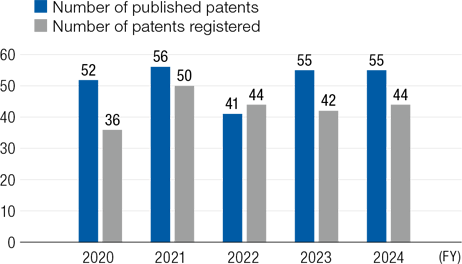
We participate in urban development through civil engineering structures such as bridges and tunnels that support people's daily lives, and structures such as buildings, condominiums and commercial facilities that support affluent lifestyles. Since our founding, we have maintained the spirit of boldly taking on the challenge of creating unprecedented products. We will continue to challenge "Japan's first" and "world's first" technologies and work to provide "new value" in the future.
Our Key Proprietary Technologies| Civil Engineering |
Large scale renewal (deck slab replacement) |
|
| Productivity improvement on construction sites |
|
|
| Longer life and greater durability |
|
|
| Building Construction |
Achieving a decarbonized |
|
| Earthquake disaster prevention technology |
|
|
| Engineering |
|
|
| Common to Civil Engineering and Building Construction |
Achieving a decarbonized |
|
| Productivity improvement on construction sites |
|
|
| New Business & Construction Peripheral Area |
Use of renewable energy |
|
Recent Technological Developments to Meet Client Expectations and Solve Social Problems
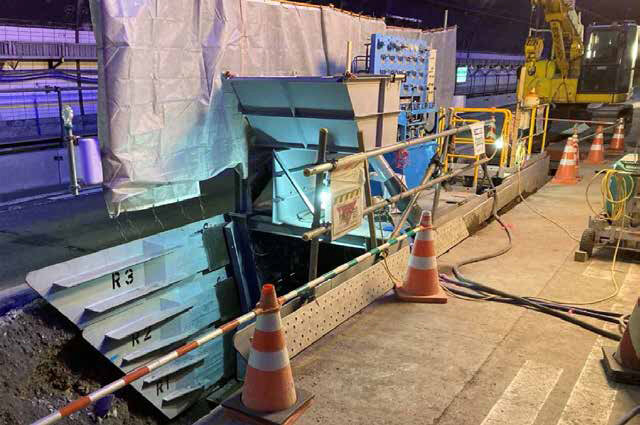
■ Quick-re-Invert Method
This method was jointly developed with the National Research and Development Agency, Public Works Research Institute (PWRI). It is used for renewing or adding inverts in tunnels that are in service. Instead of the conventional soldier-pile and lagging method for temporary earth-retaining works, it installs continuous U-shaped retaining structures using the open-pit construction technique. This approach reduces the time required for conventional earth-retaining work by approximately 35% and lowers the risk of traffic-related accidents.
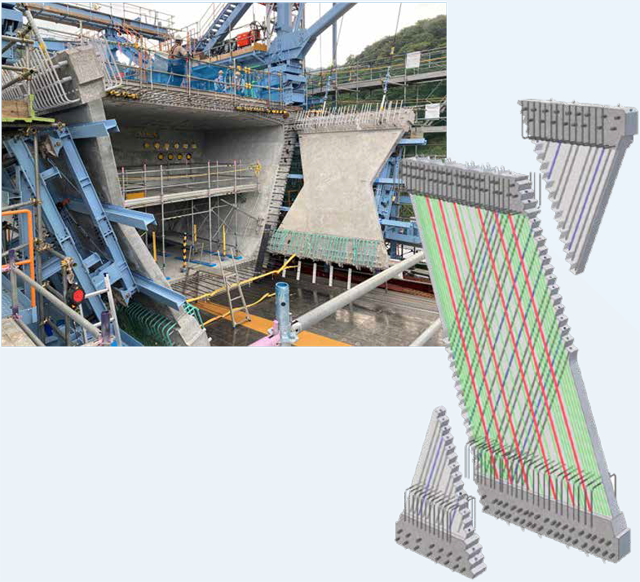
■ Rationalization of Main Girder Web Structure [Butterfly Web Bridge]
We have developed a large butterfly web structure that accommodates high girder heights and enables long-span construction by varying the girder height. This was achieved by adopting a segmented butterfly web structure, in which the butterfly web is fabricated in three sections at the factory, transported separately, and then integrated and erected on site.
By adopting the segmented butterfly web, transport restrictions such as web height and weight are relaxed compared with conventional integral butterfly webs, allowing for longer spans to be implemented.
In the future, further adoption of butterfly web bridges, which are lightweight and highly durable, can be expected.。
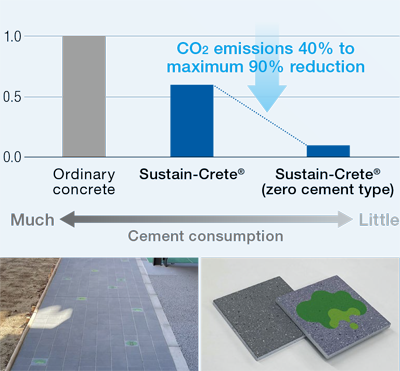
■ Sustain-Crete®
We have developed the environme ntally friendly concrete Sustain-Crete® as a construction material th at reduces CO₂ em issions, and we are promotin gits appl ication in civil engine ering and building construction projects. SustaMarble®, an artificial stone product made using the zero- cement type Sustain-Crete, was use d for the flooring of outdoor walkways at the Sumitomo Pavilion of Expo 2025 Osaka, Kansai, Japan. Zero-cement precast prestressed concrete floor s labs have also obtained the Environmental Product Declaration (EPD) certification.
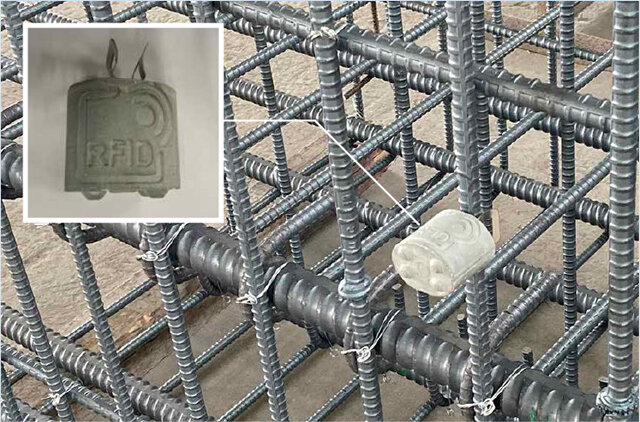
■ RF Tag Integrated Space
This system utilizes Radio Frequency (RF) tags embedded in concrete to manage production progress and stock at PCa factories. The RF tags can be read from more than one meter away, making it easy to scan them during storage or shipment. By acquiring location information along with progress registration, the system enables map-based display of component locations and allows stock positions to be searched directly from the map. This visualization of production management contributes to the digital transformation (DX) of PCa production management.
Technology Strategy
The Market Environment and Addressing Challenges by Utilizing Technologies
In the bridge field of civil engineering, we have advanced the development of technologies such as new structural forms that shorten construction periods and reduce labor requirements, thereby delivering high-quality bridges. In the building construction field, we have established a strong track record in high-rise residential projects and hold a broad range of precast concrete technologies. Amid labor shortages and rising labor costs in the construction industry, we will continue to develop and apply technologies to further enhance productivity and expand our strengths.
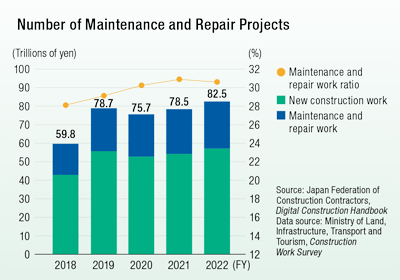
▶ Market Environment, Risks, and Opportunities
In recent years, increasingly severe and frequent weatherrelated disasters, large-scale earthquakes, and the deterioration of infrastructure have posed serious challenges. Taking into account the environment surrounding the construction industry, and with a focus on improving productivity, we are advancing technical initiatives such as rapid construction methods and the shortening of traffic restrictions during renewal projects. Through these efforts, we aim to contribute to swift disaster recovery and reconstruction, the development of sustainable and resilient social infrastructure, and the safeguarding of regional safety and security.
▶ Our Technical Responses
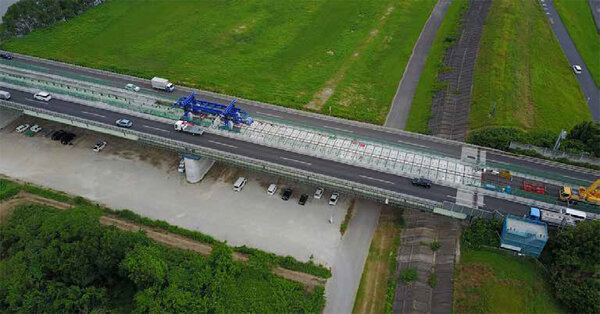
In expressway renewal projects, it is essential to maintain traffic lanes and minimize restriction periods. In bridge construction, we make use of the central median between the two carriageways and divide precast floor slabs to replace them while keeping all four lanes in each direction open. In tunnel construction, we employ the Quick-re-Invert method, which enables rapid invert construction while maintaining one traffic lane in operation.
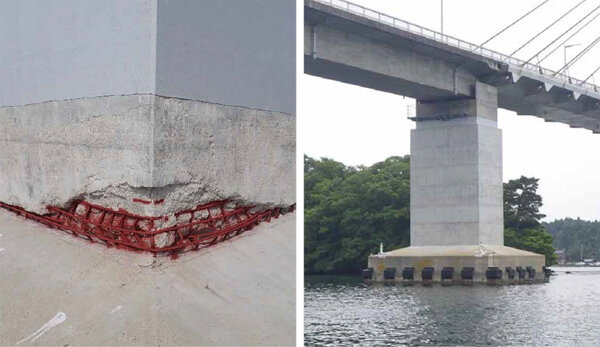
Following the Noto Peninsula earthquake in fiscal 2024, we carried out emergency restoration work on the Noto Ohashi Bridge and Twin Bridge Noto (Nakanoto Agricultural Road Bridge) by leveraging our accumulated expertise in bridge repair and reinforcement. The work included concrete jacketing of piers, girder jacking, repair of bearings and other bridge appurtenances, and embankment retaining walls behind abutments. In addition, we have been awarded the main restoration project for Noto Ohashi Bridge, the "Construction Work of the Anamizu koshinohara Bridge Restoration in Noetsu Expressway section 1," in which we will employ our proprietary rapid pier construction method to ensure prompt reconstruction.
▶ Market Environment, Risks, and Opportunities
In the domestic building construction market, construction demand continues to exceed supply capacity. In the high-rise residential field, where we have particular expertise, redevelopment projects remain active both in central urban areas and regional core cities, sustaining strong demand. At the same time, in an era of population decline, securing personnel has become increasingly difficult for construction companies, and the workforce is aging while new entrants are decreasing. Improving productivity through more efficient construction has therefore become an urgent issue.
In addition, societal demand for sustainability continues to grow, and building construction project clients are increasingly conscious of sustainability, including decarbonization. This has driven rising demand for reducing environmental impact, including initiatives such as Zero Energy Buildings (ZEB) and Zero Energy Houses (ZEH).

▶ Our Technical Responses
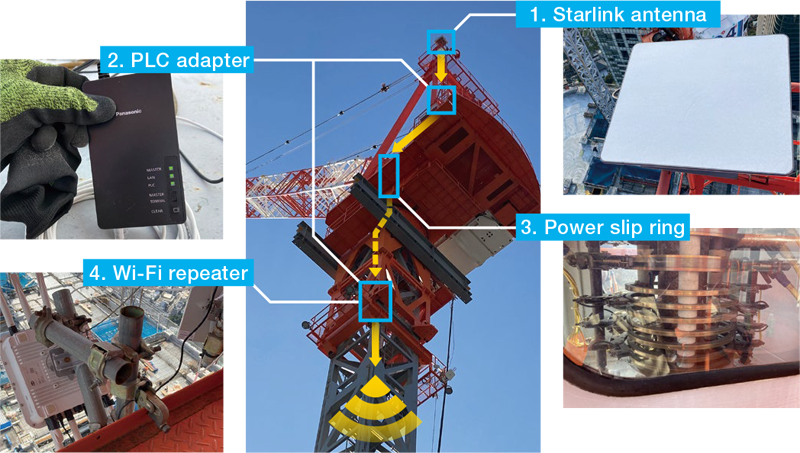
We have developed and applied a method that utilizes satellite internet communication to easily establish a communication environment on construction floors of high-rise buildings. This enables efficient information sharing and progress management on upper floors, achieving approximately a 30% reduction in manpower.
The method has been integrated into our unified precast construction management system, Precast Process Management System (PAE), to further enhance efficiency in construction management.
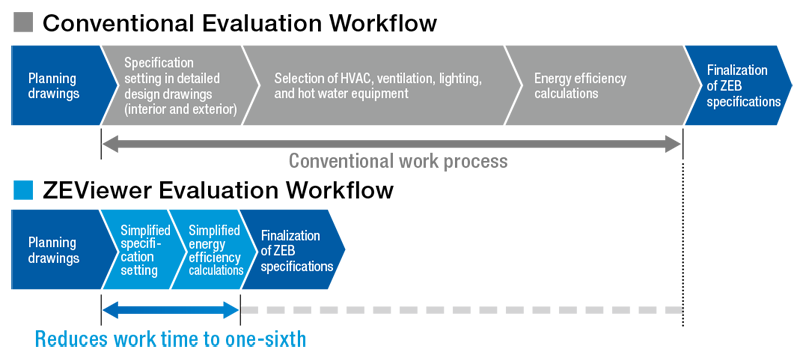
In response to growing demand for ZEB certification, we have developed and are operating ZEViewer™, a simplified evaluation system that can quickly determine energy-saving levels (Building Energy Index, BEI). This system reduces the time required for energy efficiency assessment to one-sixth of conventional methods, enabling rapid proposals during the planning and design stages to meet client needs and societal demands for sustainability.